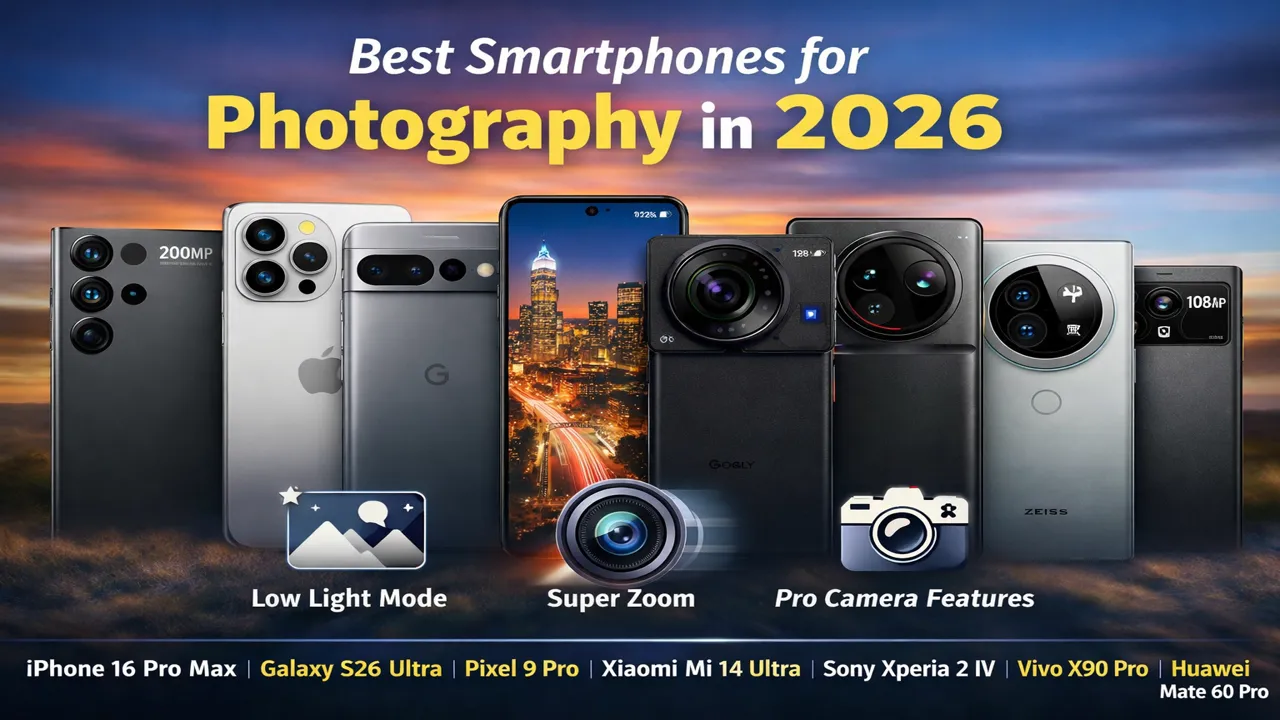
In 2026, the line between smartphones and professional cameras has become increasingly blurred, with manufacturers pushing the limits of mobile photography. Whether you’re a seasoned photographer or someone who loves snapping photos for fun, choosing the right smartphone can make a significant difference in your image quality. With advanced features such as multiple lenses, AI-powered enhancements, and pro-level controls, these smartphones are a great choice for photography enthusiasts.
Let’s dive into the best smartphones for photography in 2026!
1. Apple iPhone 16 Pro Max
Apple has long been a leader in mobile photography, and the iPhone 16 Pro Max continues this trend. It features a 48MP primary sensor, an improved ultra-wide camera, and a telephoto lens that lets you zoom in without sacrificing quality. Apple’s Night Mode is enhanced, making low-light photography crisp and clear.
Key Features:
-
48MP primary camera
-
12MP telephoto lens with 5x optical zoom
-
Advanced Night Mode for better low-light photography
-
ProRAW and ProRes for professional-level control
-
LiDAR scanner for faster autofocus and better low-light portrait photography
2. Samsung Galaxy S26 Ultra
Samsung has always been a contender for the best smartphone camera, and the Samsung Galaxy S26 Ultra is no exception. The device boasts a 200MP main camera, paired with a 12MP ultra-wide camera, and a 10MP periscope lens for up to 10x optical zoom. Samsung’s Space Zoom technology allows you to capture distant objects with impressive clarity.
Key Features:
-
200MP primary camera with advanced autofocus
-
12MP ultra-wide camera with a wide field of view
-
10MP telephoto lens with 10x optical zoom
-
Space Zoom and 100x digital zoom
-
Super Steady Video for stable recordings
3. Google Pixel 9 Pro
The Google Pixel 9 Pro is known for its software-driven photography, with Google’s powerful AI processing taking your photos to the next level. Featuring a 50MP primary camera and an improved ultra-wide lens, the Pixel 9 Pro excels in low-light conditions thanks to its Night Sight mode. Google also adds the ability to shoot in RAW format for more control during editing.
Key Features:
-
50MP primary sensor
-
12MP ultra-wide lens with AI-assisted corrections
-
Night Sight and Astrophotography Mode
-
Google’s AI-powered HDR+ for exceptional dynamic range
-
RAW format for post-processing flexibility
4. Xiaomi Mi 14 Ultra
Xiaomi’s Mi 14 Ultra has a remarkable camera system that includes a 108MP main sensor and a 12MP telephoto lens with 3x optical zoom. The Mi 14 Ultra’s Super Night Mode and AI-enhanced photography help capture clear photos even in challenging lighting conditions.
Key Features:
-
108MP primary sensor for ultra-high-resolution images
-
12MP telephoto lens with 3x optical zoom
-
AI-based scene optimization
-
Super Night Mode and 8K video recording
-
Ultra-wide angle shots with 120° field of view
5. Sony Xperia 2 IV
Sony brings its camera expertise into the smartphone realm with the Xperia 2 IV. This device features a 50MP primary camera with Sony’s Exmor RS sensor, making it perfect for both photos and videos. The Zeiss T lens* ensures exceptional clarity and color accuracy, while its pro-level manual controls make it an ideal choice for professionals.
Key Features:
-
50MP Exmor RS sensor with Zeiss T* lens
-
12MP ultra-wide camera for expansive shots
-
Pro-level camera app for manual control
-
4K HDR video recording with cinematic results
-
High frame rate for slow-motion video
6. OnePlus 12 Pro
The OnePlus 12 Pro offers a 48MP triple-camera setup, with a wide-angle lens and a 5x optical zoom telephoto lens. OnePlus’ Hasselblad partnership continues to improve the color accuracy and depth of photos, with a vibrant and natural look. The UltraShot HDR allows for high-quality shots in various lighting conditions.
Key Features:
-
48MP main sensor with Hasselblad color calibration
-
5x optical zoom telephoto lens
-
UltraShot HDR for better highlights and shadow details
-
Nightscape Mode for low-light photography
-
120Hz Fluid AMOLED display for sharp image previews
7. Oppo Find X7 Pro
The Oppo Find X7 Pro is designed for photography enthusiasts, boasting a 50MP quad-camera system. Oppo’s RGBW sensor improves the brightness and detail in photos, especially in low-light conditions. With the 50MP ultra-wide camera, this phone is perfect for landscape photography.
Key Features:
-
50MP main camera with RGBW sensor
-
50MP ultra-wide-angle camera
-
13MP telephoto lens with 3x optical zoom
-
AI-enhanced portrait mode for professional-level bokeh effects
-
4K video recording with enhanced stabilization
8. Vivo X90 Pro
The Vivo X90 Pro is equipped with a 50MP gimbal-stabilized sensor, which provides incredible stability while shooting. The 50MP telephoto lens offers sharp zoom capabilities, making it a great choice for capturing distant subjects.
Key Features:
-
50MP gimbal-stabilized main sensor
-
50MP telephoto lens for incredible zoom performance
-
AI-enhanced portrait photography
-
Night mode for vivid and bright low-light shots
-
8K video recording capabilities
9. Huawei Mate 60 Pro
The Huawei Mate 60 Pro continues Huawei’s legacy of cutting-edge photography. With a 64MP primary sensor, 50MP ultra-wide lens, and 3x optical zoom camera, this phone offers versatility and exceptional clarity in all conditions. Huawei’s XD Fusion Pro technology enhances color accuracy and dynamic range.
Key Features:
-
64MP main camera with XD Fusion Pro
-
50MP ultra-wide lens with enhanced depth of field
-
3x optical zoom telephoto lens
-
Master AI for scene detection and automatic optimization
-
4K video recording with advanced stabilization
10. Motorola Edge 40 Pro
The Motorola Edge 40 Pro features a 108MP camera and a 12MP ultra-wide lens for versatile photo and video capabilities. The OIS technology helps in minimizing camera shake, and the Night Vision mode ensures excellent results in low light.
Key Features:
-
108MP primary sensor with OIS
-
12MP ultra-wide camera
-
Night Vision for low-light performance
-
4K HDR video with real-time adjustments
-
AI Scene Detection for automatic enhancements
Conclusion
The smartphones listed above represent the pinnacle of mobile photography in 2026. Whether you’re looking for incredible zoom capabilities, low-light performance, or pro-level manual control, these devices provide an outstanding combination of features that can rival traditional cameras. Choose based on your specific needs, whether it’s for everyday snapshots or more advanced photography work, and you’ll be able to capture stunning photos with ease.
Which smartphone do you think is the best for photography in 2026? Let us know in the comments!